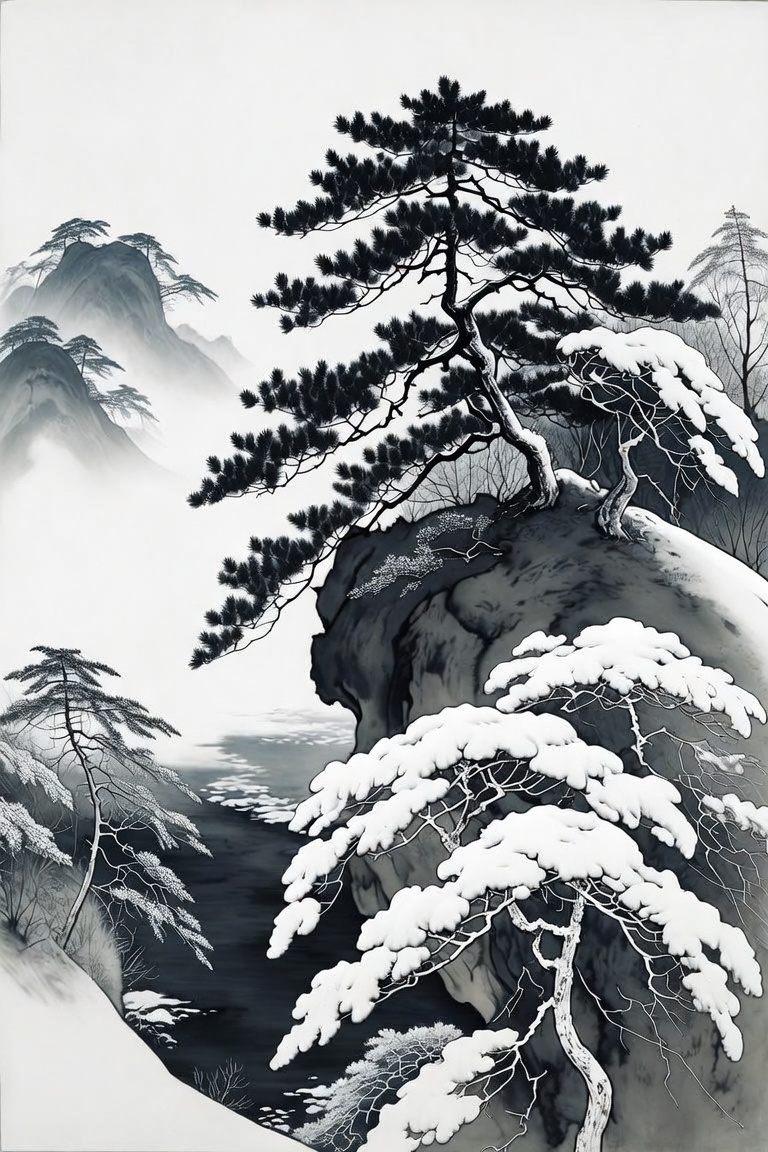
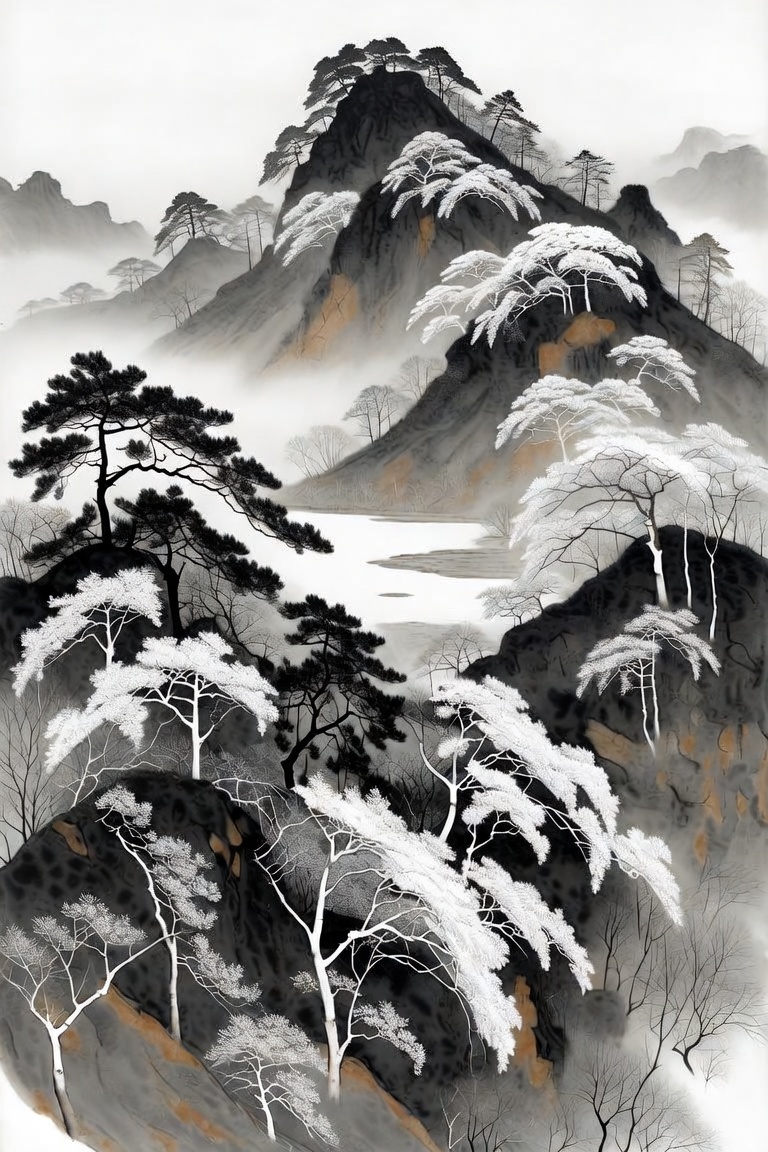
1~12 Korea’s Four Seasons Black Ink Wash Painting
Korea’s Four Seasons: When to Visit and the Landscapes That Define Them
Korea experiences four sharply distinct seasons, each with its own character, colors, and atmosphere. For travelers, this means the country feels almost like four different destinations depending on when you arrive. Spring and autumn are generally considered the most pleasant times to visit, while summer and winter offer their own unique rewards if you prepare for the weather.
The changing seasons have long been a central theme in Korean art, especially in traditional sumukhwa (ink wash painting). These monochrome works capture the essence of each month through mountains, blossoms, rain, and snow using the subtlety of ink and negative space. The images below are inspired by that tradition.
Spring (March–May): Cherry Blossoms and Fresh Green
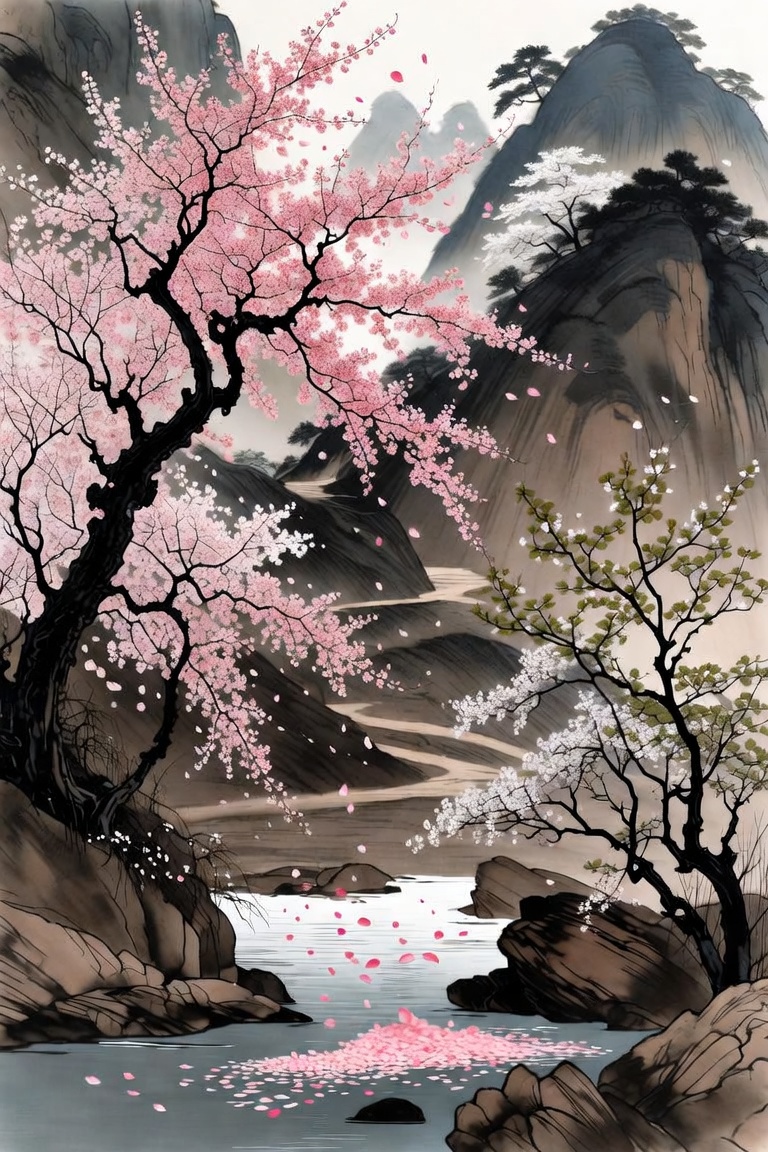
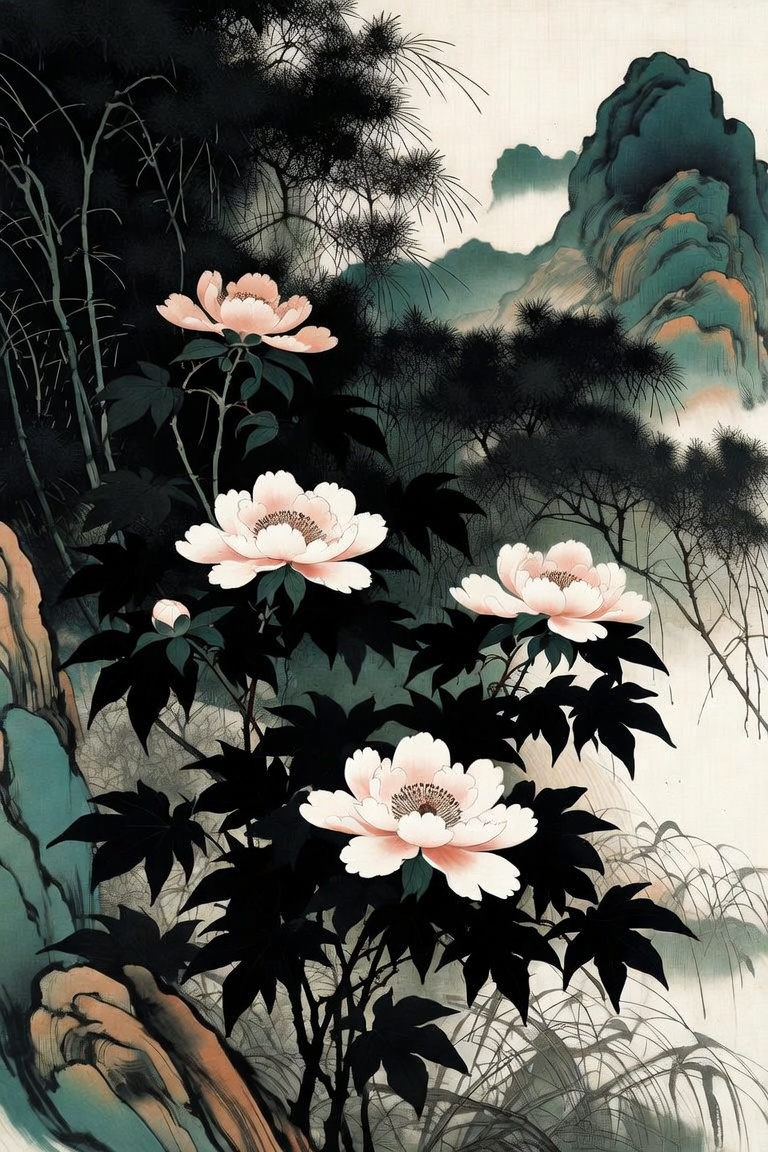
Spring arrives gradually. March still carries a chill, with early azaleas (jindallae) appearing on mountain slopes. By April, the country is covered in cherry blossoms, and May brings fuller greenery and peonies.
Weather is mild and pleasant, making spring one of the best times for outdoor sightseeing. Parks, palace gardens, and riverside paths are especially beautiful. Festivals celebrating blossoms are common in cities and countryside alike.
Travel tip: Late March through mid-April is peak cherry blossom season in most areas. Book accommodation early, as this is a popular period for both domestic and international visitors.
Sumukhwa mood: Early spring mountains with azaleas, falling cherry petals over a stream, and the quiet transition from winter to green.
Summer (June–August): Rain, Lotus, and Heat
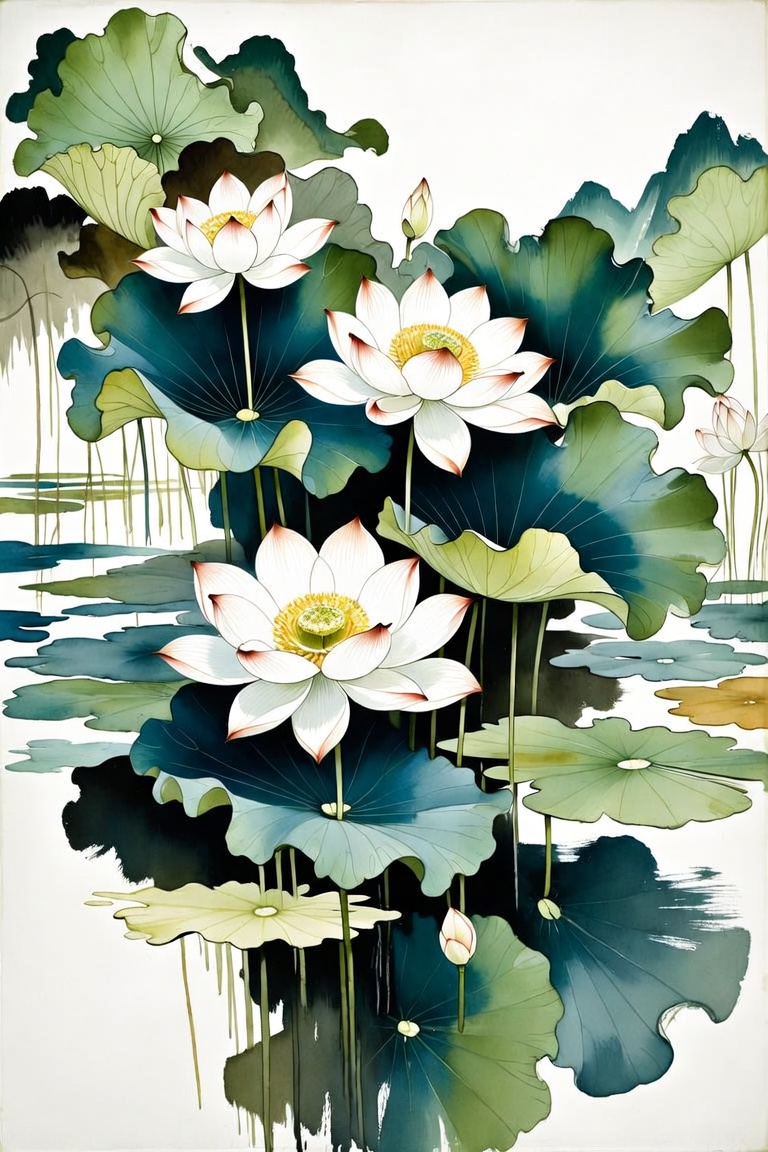
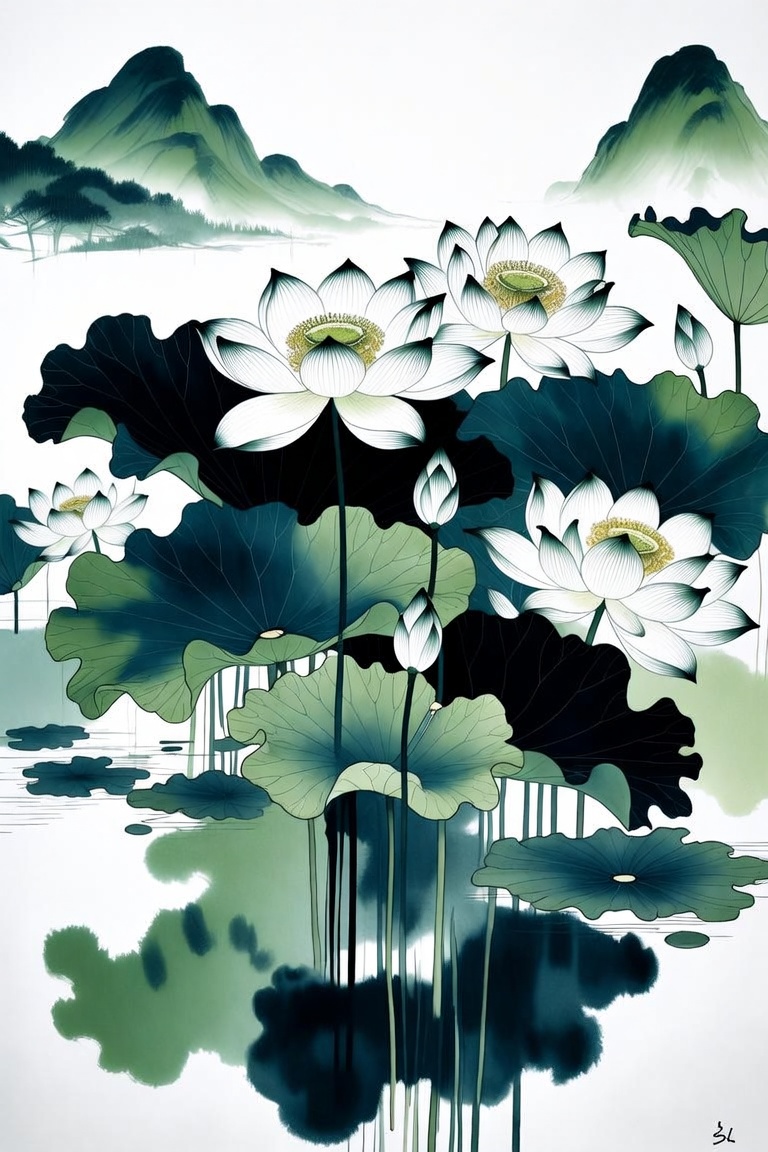
June brings the jangma (monsoon), a period of heavy rain that lasts several weeks. After the rains subside, July and August are hot and humid. Despite the heat, summer has its charms: lotus flowers bloom on ponds, coastal areas fill with beachgoers, and mountain valleys offer cooler air.
This is a good time for water activities, island hopping, or visiting temples nestled in forested mountains. However, the combination of heat and humidity can be intense, and outdoor sightseeing is often best done in the early morning or evening.
Travel tip: If you visit in summer, plan indoor cultural activities (museums, palaces, traditional markets) for midday and save outdoor time for cooler hours. Coastal and mountain regions can feel more comfortable than the cities.
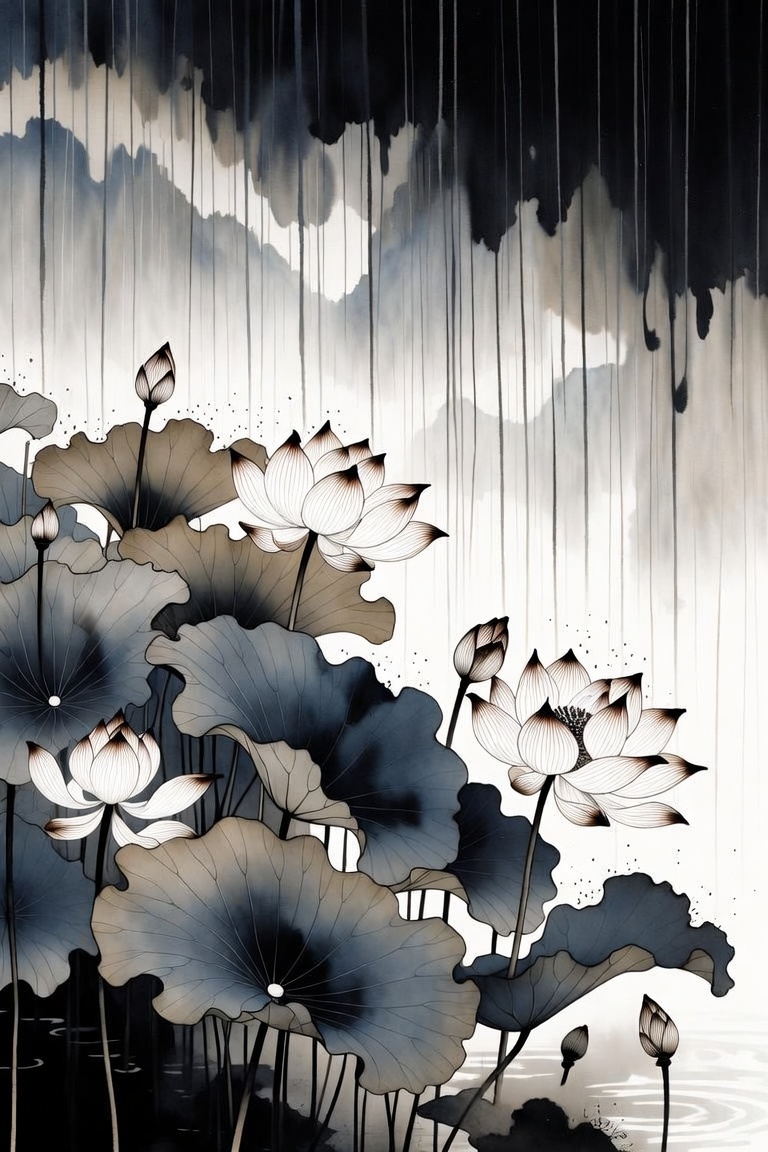
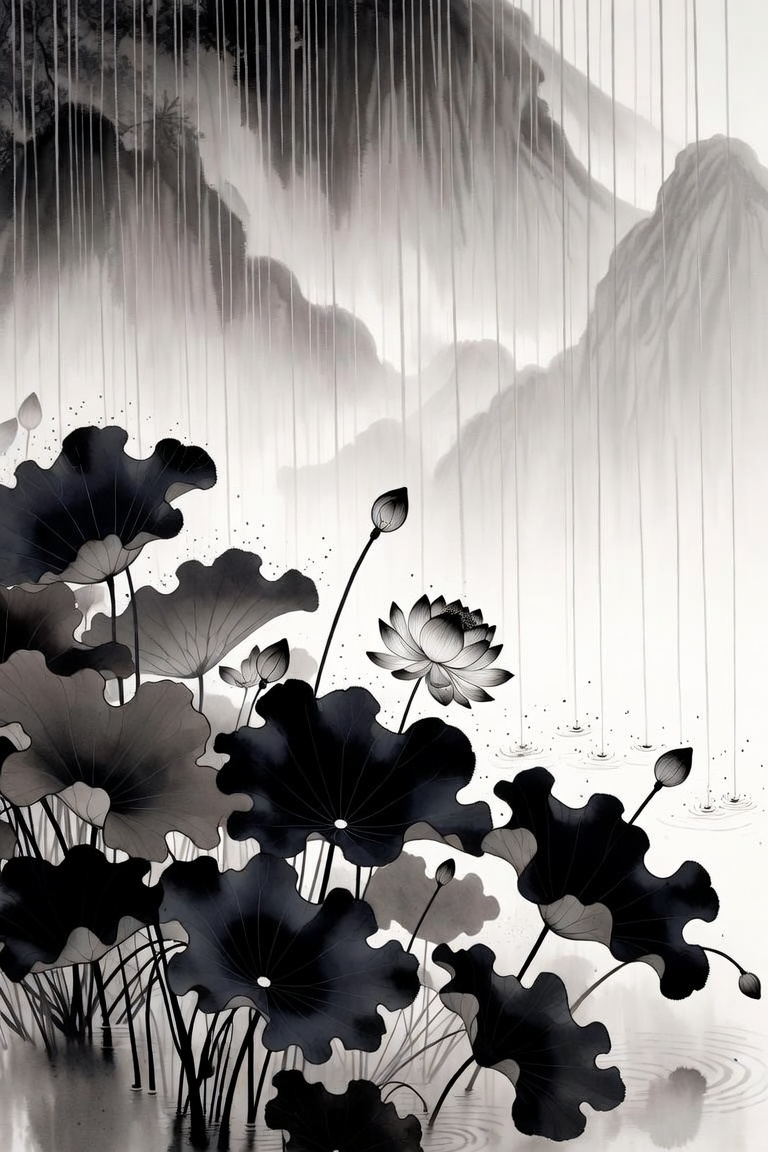
Sumukhwa mood: Rain falling on a lotus pond, broad leaves on still water, and misty mountains under heavy summer skies.
Autumn (September–November): Clear Skies and Foliage
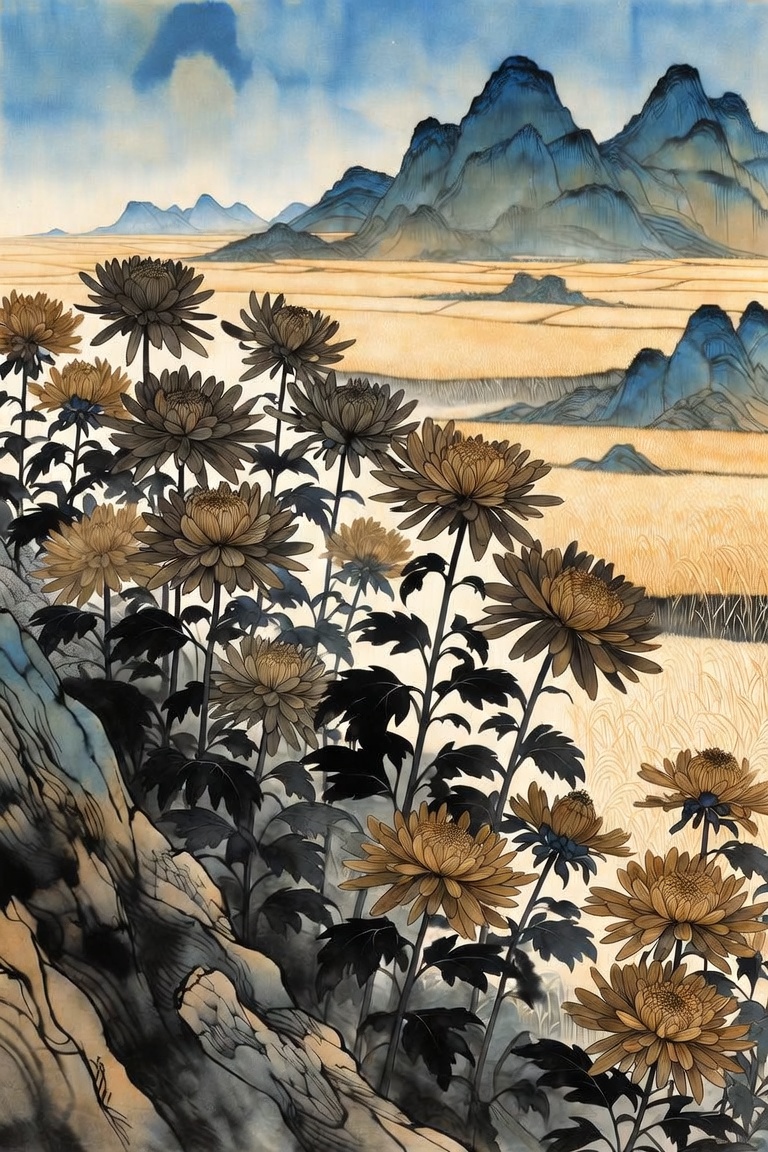
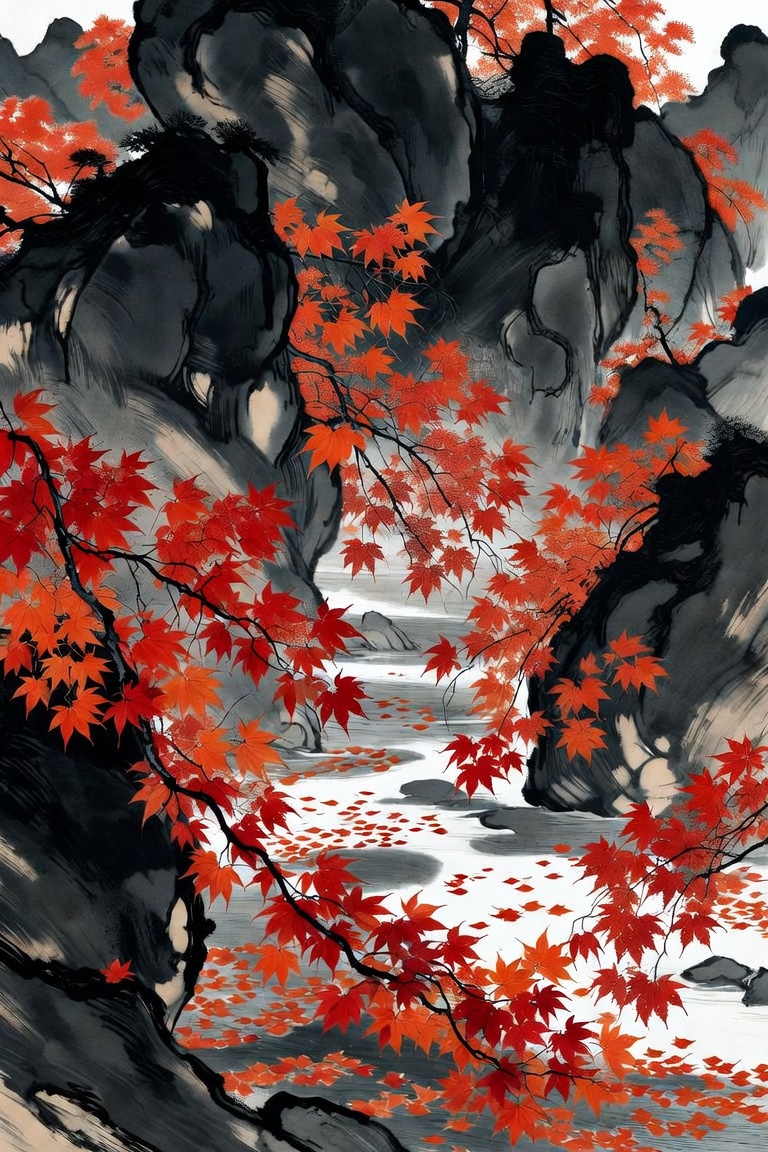
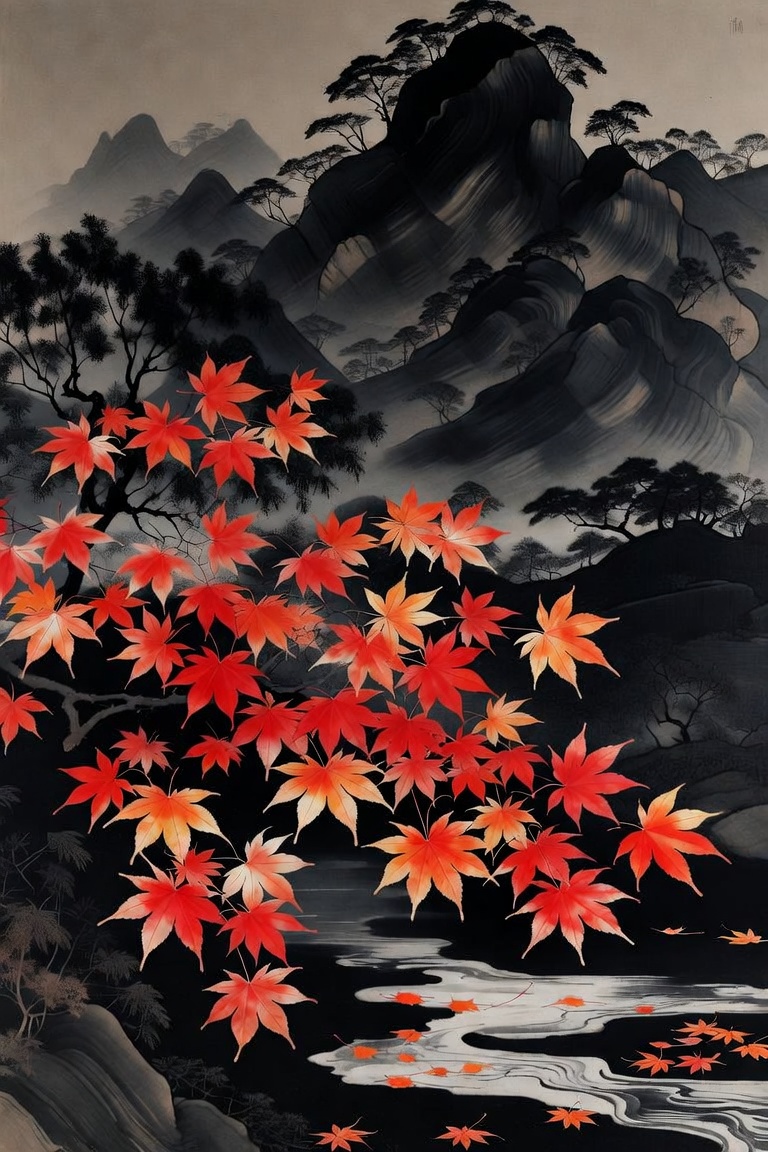
Autumn is widely regarded as the best season to visit Korea. The weather is crisp and clear, humidity drops, and the landscape turns vivid with autumn colors. Chrysanthemums appear in September, while October brings the peak of maple and ginkgo foliage, especially in mountain regions and along palace walls.
The light is particularly beautiful this time of year, and the comfortable temperatures make walking through cities, hiking, and visiting historical sites especially enjoyable. Chuseok (Korean Thanksgiving) falls in September or October and offers a chance to see traditional family customs, though some businesses close for the holiday.
Travel tip: Mid-to-late October is generally the best window for foliage. Mountain areas such as Seoraksan, Naejangsan, and the suburbs of Seoul are popular. Book trains and lodging in advance for weekends.
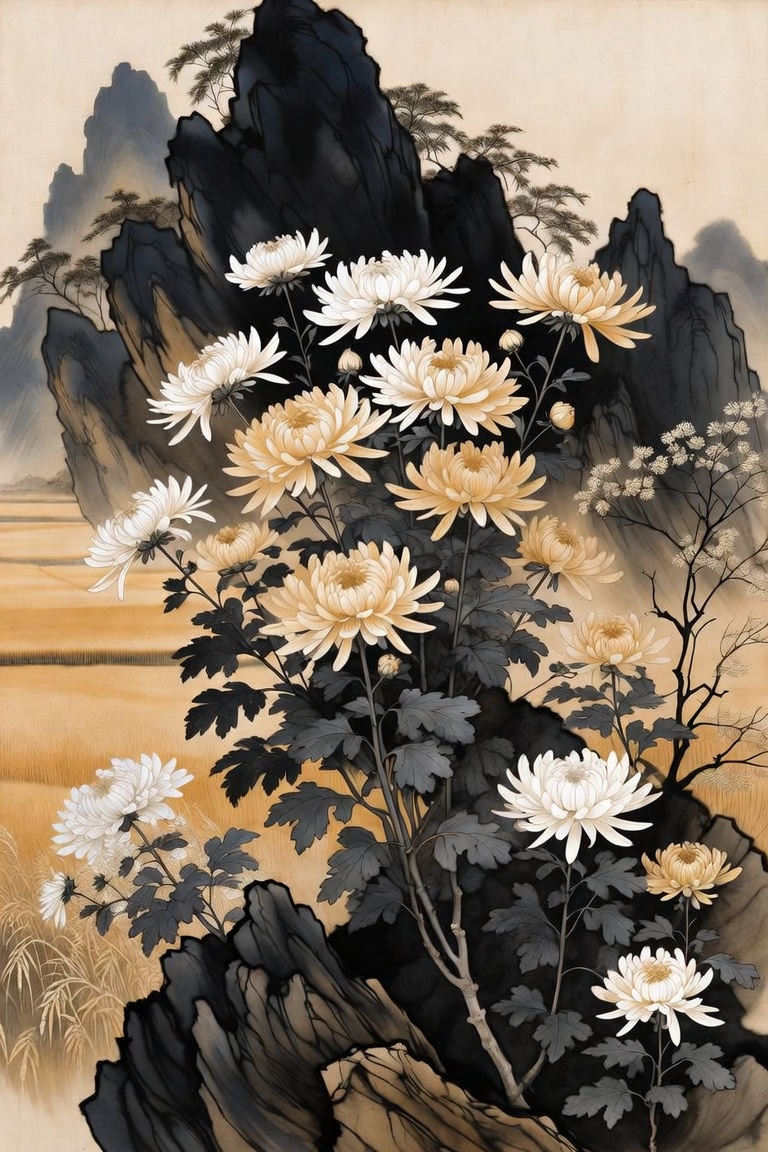
Sumukhwa mood: Chrysanthemums among rocks, crimson maple leaves against dark mountain ridges, and the clear, spacious feeling of autumn skies.
Winter (December–February): Snow, Pines, and Quiet
Winter is cold, particularly in January, with frequent dry winds and occasional heavy snow. The landscape becomes stark and elegant: snow-covered pines, bare branches, and quiet rivers. Cities remain lively with winter illuminations, hot springs, and indoor attractions, while mountain areas offer skiing and winter festivals.
While the cold can be a challenge for those unused to it, winter has a special beauty and fewer crowds at many outdoor sites. Traditional markets, temple stays, and cafes become especially appealing.
Travel tip: Dress in layers and prepare for temperatures that can drop well below freezing. December and February tend to be slightly milder than January. Snowy scenes are most reliable in the mountains and northern regions.
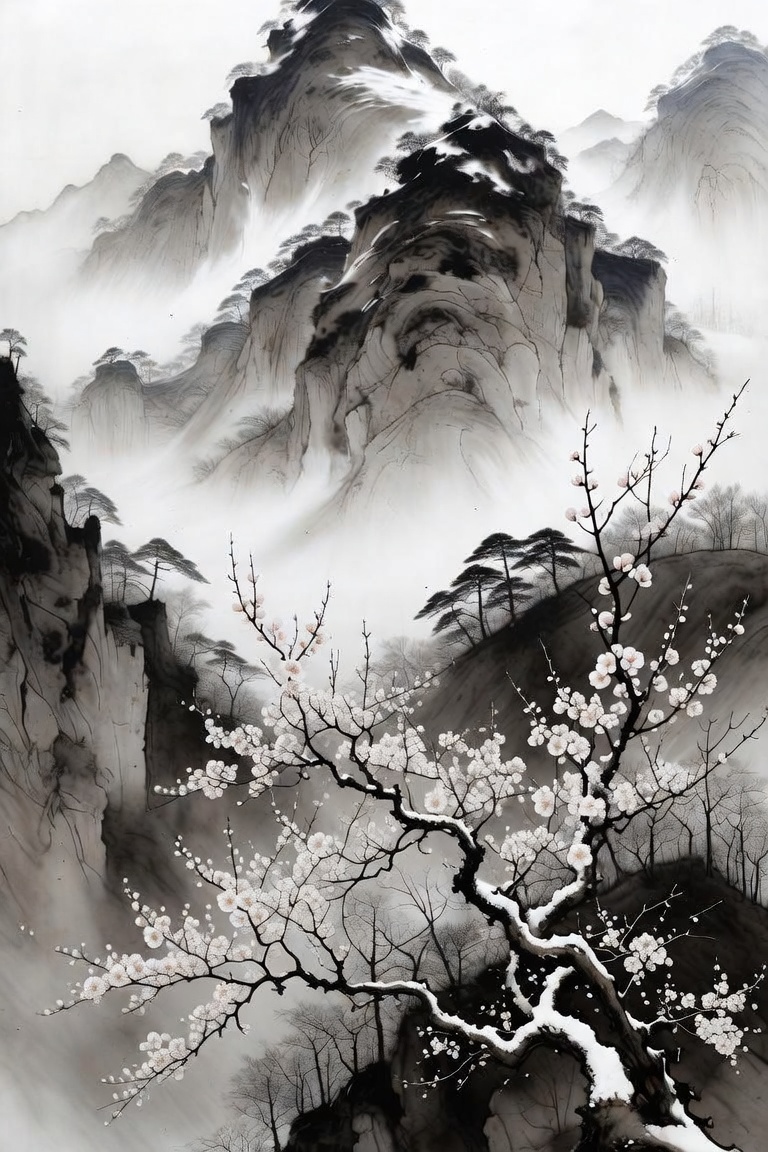
Sumukhwa mood: Snow-laden pine trees on mountain ridges, plum blossoms against white snow, and the quiet strength of winter ink paintings.
When Is the Best Time to Visit Korea?
- Best overall: Late March–May and September–early November. Comfortable weather, beautiful scenery, and the widest range of outdoor activities.
- Most photogenic: April (cherry blossoms) and October (autumn foliage).
- Quieter and more affordable: Early March, late November, and winter (excluding major holiday periods).
- Avoid if possible: The peak of the monsoon (late June–mid-July) if you dislike heavy rain, and the hottest weeks of late July–mid-August if you are sensitive to heat and humidity.
Each season offers a different Korea. Whether you prefer the soft colors of spring, the vivid clarity of autumn, the green intensity of summer, or the stark elegance of winter, the landscape changes dramatically—and traditional ink paintings have long tried to capture exactly that transformation.
==========================================================
Korean sumukhwa ink wash painting of a snow-covered mountain landscape in deep winter, delicate plum blossoms blooming on gnarled branches against white snow, subtle ink gradients from deep black to pale gray, misty valleys, sparse pine trees, vast negative space, traditional brushwork, elegant and serene atmosphere, monochrome with faint pink plum accents

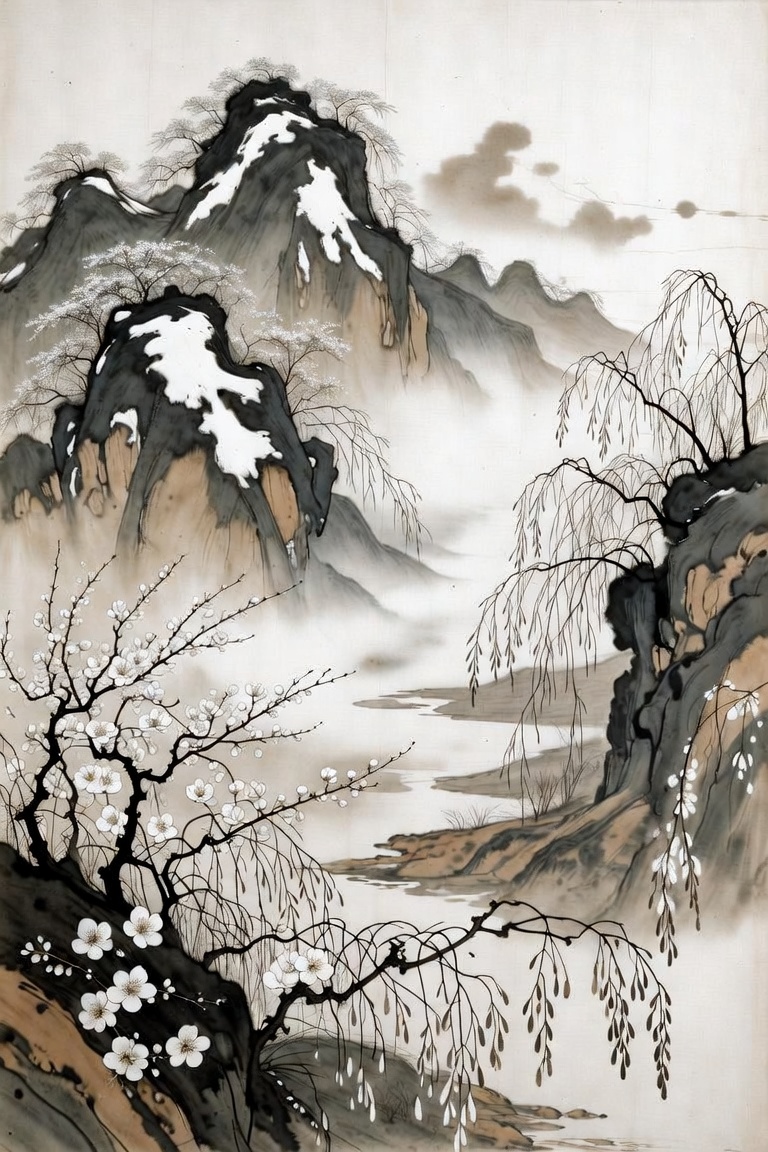
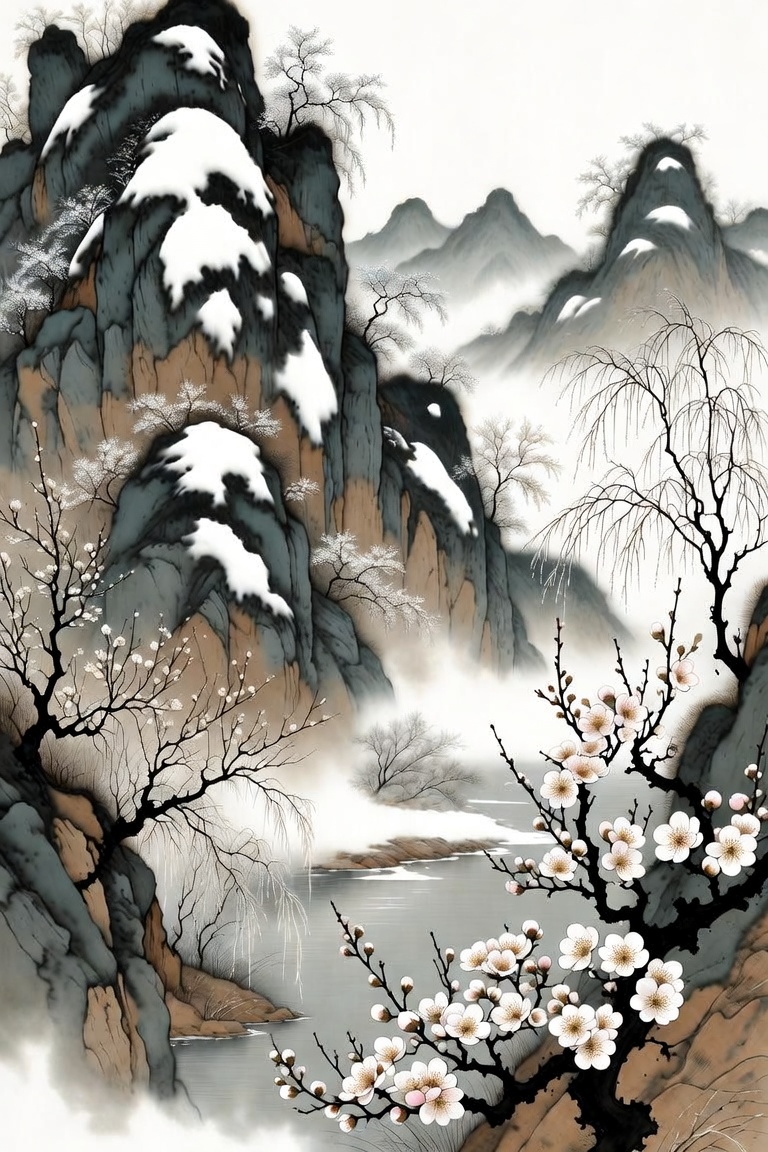
Traditional Korean ink wash painting of late winter transitioning to early spring, snow patches melting on rocky mountains, early plum blossoms and bare willow branches, cold mist rising from a quiet river, delicate ink bleeding effects, minimal composition with generous white space, subtle tonal variation, contemplative mood
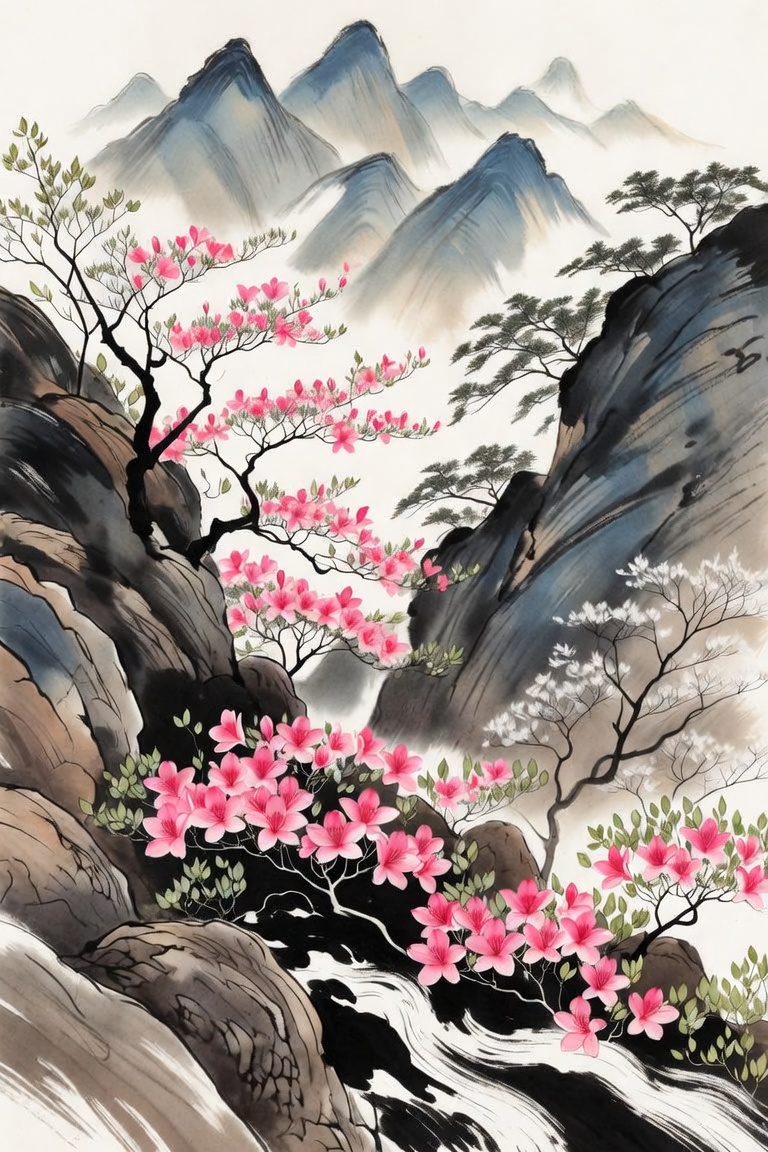
Korean sumukhwa style painting of early spring mountains, clusters of pink azalea (jindallae) flowers on rocky slopes, fresh green buds emerging, soft ink washes for distant peaks, light mist, flowing river below, expressive brushstrokes, gentle and hopeful atmosphere, mostly monochrome with restrained color on flowers
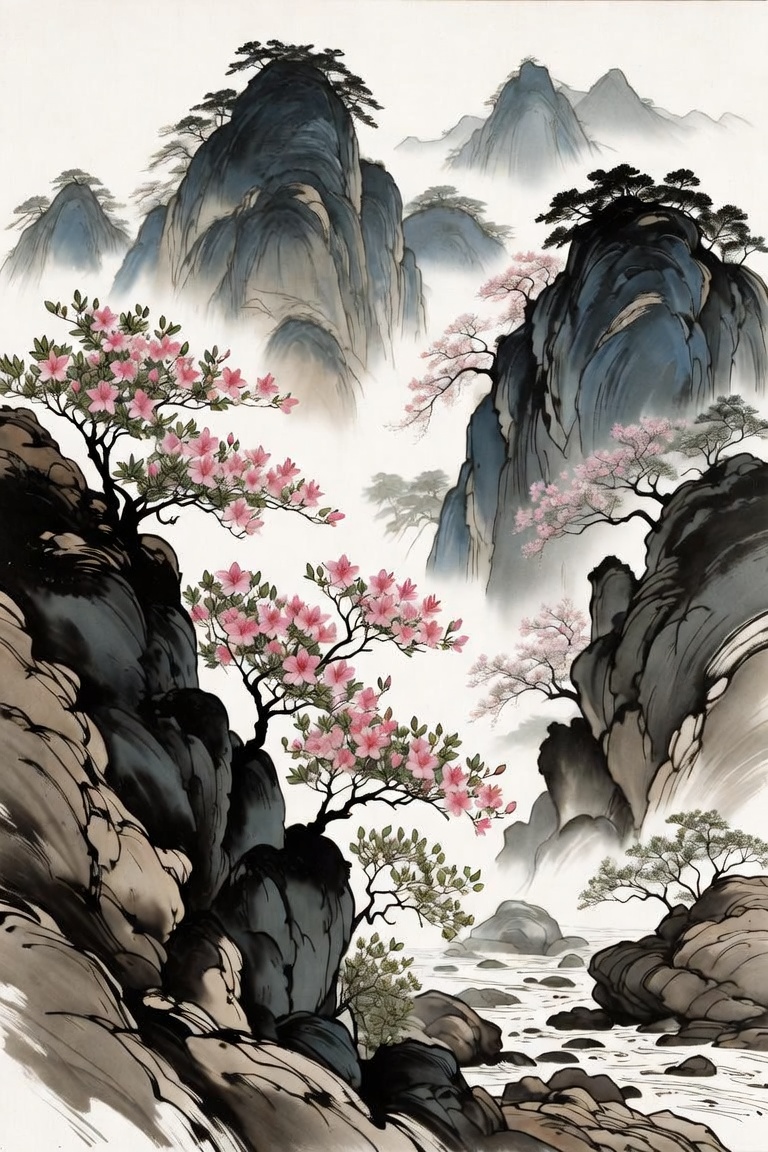
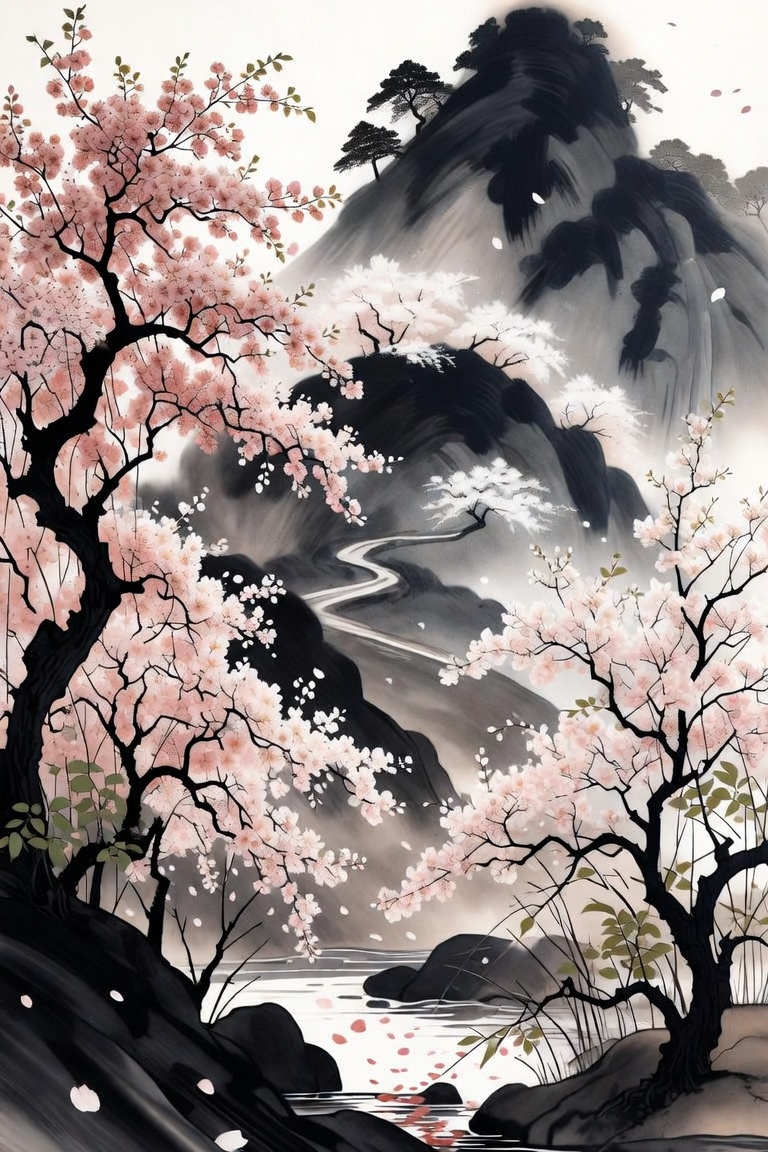
Elegant Korean ink wash landscape of spring cherry blossoms in full bloom along a mountain path, pale pink petals falling into a clear stream, young green leaves, soft atmospheric perspective with layered ink tones, traditional brushwork capturing movement of petals, serene and poetic composition
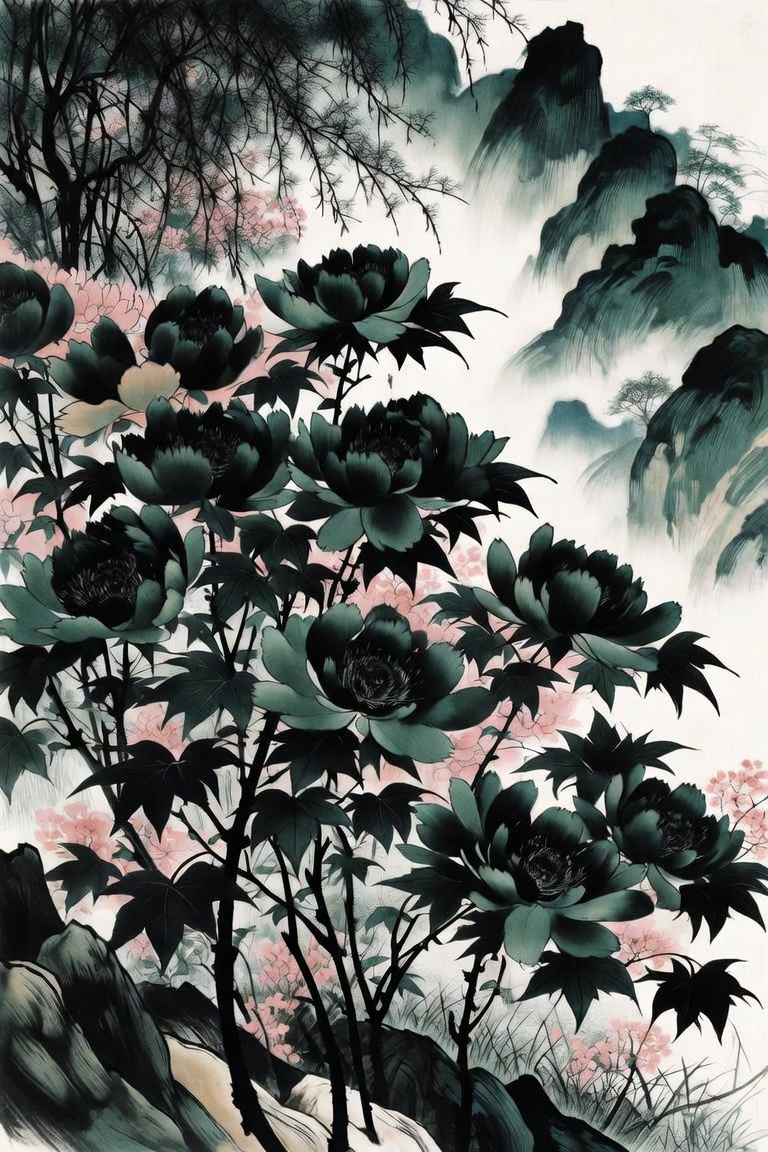
Korean sumukhwa painting of lush late spring, large peony blossoms with rich ink and subtle color washes, dense foliage, distant mountains softened by mist, strong calligraphic brush lines for stems and rocks, balanced composition with negative space, vibrant yet restrained seasonal energy
Traditional Korean ink wash painting of early summer rain, lotus leaves and budding lotus flowers on a still pond, rain streaks rendered with thin ink lines, misty mountains in the background, wet paper bleeding effects, humid and quiet atmosphere, monochrome with deep ink contrasts
Korean sumukhwa summer scene of a lotus pond in full bloom, large lotus flowers and broad leaves, reflections on still water, distant green mountains under a clear sky suggested by empty space, bold and fluid brushwork, cool and refreshing mood despite the heat
Korean sumukhwa painting of early autumn, chrysanthemum flowers in bloom among rocks, golden rice fields suggested in the distance with light ink, clear autumn sky, sharp mountain ridges, elegant brushwork, harvest atmosphere, restrained color on the chrysanthemums
Traditional Korean ink wash autumn landscape, maple leaves in vivid red and orange against dark ink mountains, clear river with fallen leaves, crisp atmospheric perspective, strong contrast between deep black and bright accents, poetic and luminous fall mood
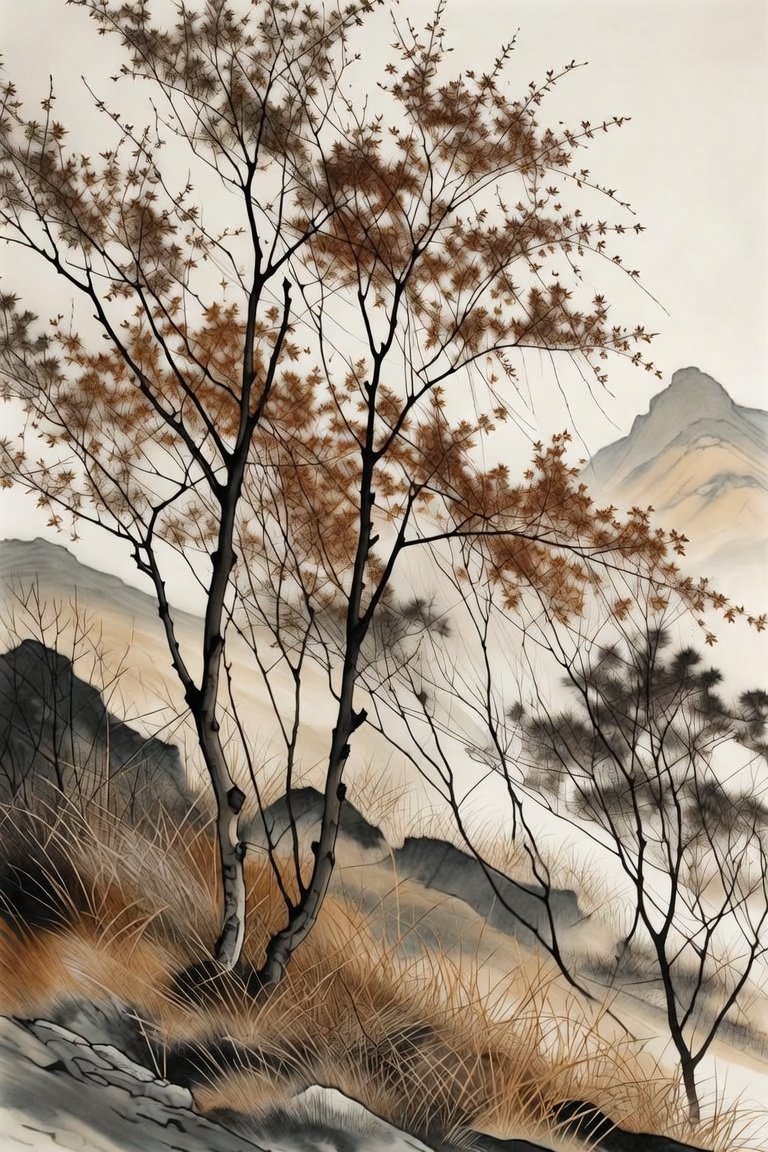
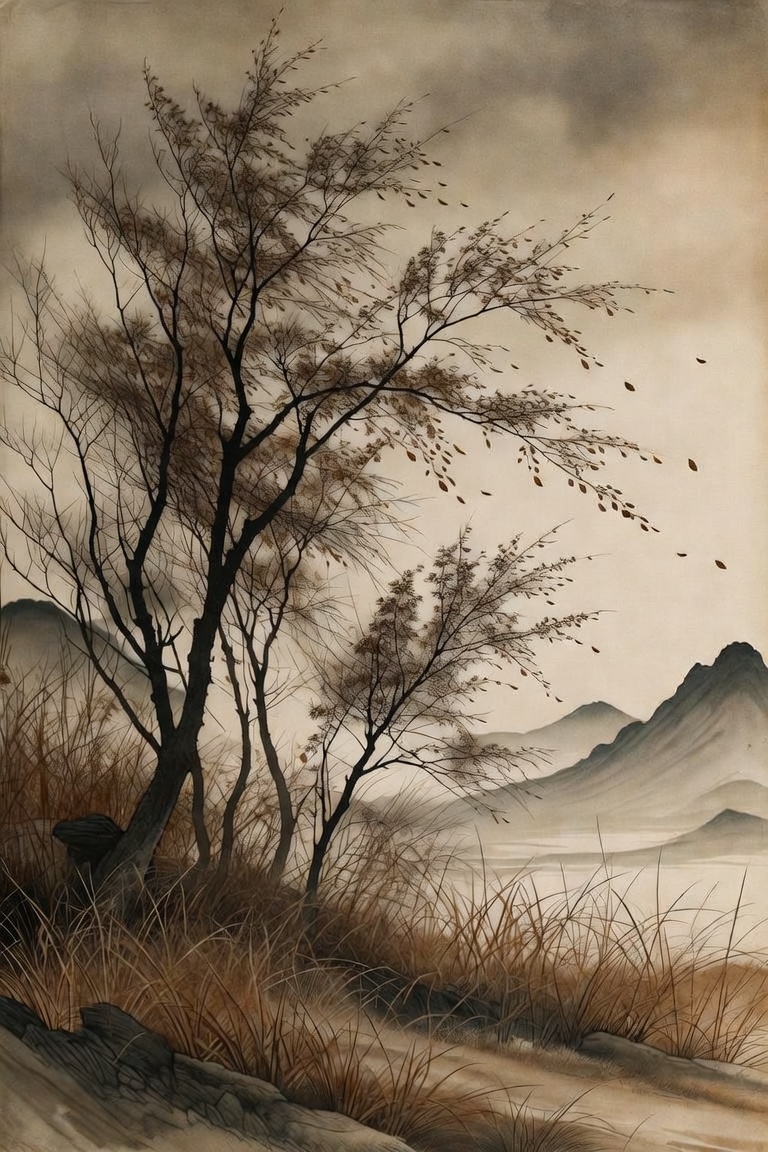
Korean sumukhwa painting of late autumn, bare trees with scattered remaining leaves, wind-swept branches, dry grasses and rocks, distant mountains in pale ink washes, sense of emptiness and transition, delicate and melancholic brushwork, vast negative space
Korean ink wash winter painting of snow-covered pines on a mountain ridge, heavy snow rendered with reserved white paper and soft ink edges, cold mist, quiet river, strong and resilient pine trunks in deep ink, solemn and pure atmosphere of deep winter